
Apple has introduced Apple HomeView, a new smart home display designed to bring entertainment, video calling, and home automation into a single device. The product combines a 7-inch Liquid Retina display with an upgraded Siri AI assistant, allowing household members to access personal information, control compatible smart home devices, and enjoy music and video content.
According to Apple, HomeView is designed for shared household use while providing a personalized experience for individual users. The device can sit on a table or be mounted on a wall, making it suitable for spaces such as kitchens, bedrooms, and hallways.
Pre-orders have opened in several markets, including India, the United States, the United Kingdom, Canada, Australia, and New Zealand. Apple says availability will begin on November 13, 2026.
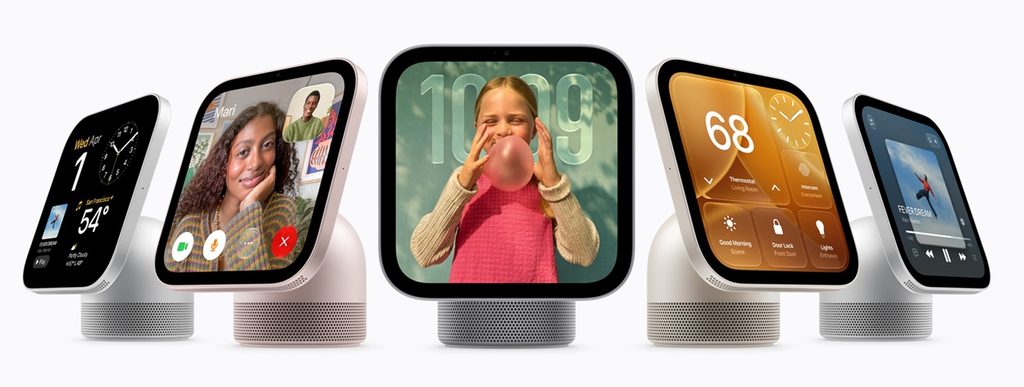
Apple HomeView Combines a Display With Smart Home Controls
HomeView features a 7-inch Liquid Retina display attached to a speaker base through a stainless steel hinge. The design allows users to adjust the screen’s viewing angle when the device is placed on a table.
Apple is offering the tabletop model in four colors: silver, starlight, rose pink, and space gray. A separate wall-mounted version will be available in silver and space gray.
The display uses True Tone and automatic brightness adjustment to adapt to changing lighting conditions. Its interface can also change the amount of information displayed depending on how close someone is to the screen.
Apple is positioning HomeView as more than a digital display. Users can access compatible apps, view information at a glance, make calls, and manage connected home accessories without relying entirely on a smartphone.
Siri AI Brings Personalized Assistance to the Home
One of HomeView’s main features is Siri AI, which Apple describes as a more conversational version of its voice assistant. The company says the updated assistant can answer questions, help users discover music, and provide information based on what appears on the screen.
When paired with a compatible Apple Intelligence-enabled iPhone or iPad, Siri AI can also use relevant personal context from apps such as Calendar and Messages to provide more useful responses and help users complete tasks.
Apple says conversations started on HomeView can continue through the Siri app on supported Apple devices, including iPhone, iPad, Mac, Apple Watch, and Apple Vision Pro.
Users without an Apple Intelligence-enabled iPhone or iPad will still be able to access Siri AI’s general knowledge, conversational features, and music discovery capabilities on HomeView.
The assistant’s availability is initially limited to English in selected markets, including India, the US, the UK, Australia, Canada, New Zealand, Singapore, and South Africa.
Face Recognition Creates Individual User Profiles
HomeView is designed for households where several people share the same device. Apple says it can recognize up to six users and provide each person with a personalized home screen, including individual apps and widgets.
The device can display personal information through supported apps while allowing household members to enjoy shared photo albums and music together.
Users can also customize the display with different visual styles. These include a Photos face for displaying memories, an interactive Flow design, and animated Snoopy content. The interface is intended to make the device useful for checking information as well as displaying photos and artwork.
Entertainment and Video Calling Features
Apple is also emphasizing HomeView’s audio capabilities. The device includes custom speakers, a down-firing woofer, and computational audio technology designed to deliver clear sound and stronger bass.
Users can access Apple Music, Apple Podcasts, Apple TV, Apple News, and compatible third-party audio and video applications. The display also supports animated album artwork and lyrics for Apple Music.
With Apple’s Handoff feature, users can transfer playback from a compatible iPhone to HomeView by bringing the phone close to the display. Multiple HomeView devices, HomePod speakers, and compatible AirPlay speakers can also be configured for multiroom audio.
For communication, HomeView supports FaceTime with Center Stage, which helps keep participants in the frame as they move around. Users can also read and respond to Messages, send announcements to other rooms through Intercom, and use Find My to locate compatible devices and personal items.
Apple has included practical features for everyday activities as well. For example, HomeView can turn recipes into step-by-step instructions, provide timer controls, and help users keep track of ingredients while cooking.
HomeView Expands Apple’s Smart Home Ecosystem
HomeView also serves as a central dashboard for compatible smart home accessories. Users can control lights, adjust thermostats, lock doors, close blinds, and view feeds from supported security cameras.
Apple says the Home Camera face can display up to nine camera feeds simultaneously. This could help users monitor entrances, check deliveries, or keep an eye on pets without opening separate applications.
With a supported iCloud+ subscription and compatible cameras, the system can provide notifications related to people, familiar faces, pets, packages, and vehicles. HomeView also supports video descriptions for compatible HomeKit Secure Video footage.
Another safety feature can detect the sound of smoke or carbon monoxide alarms and send alerts to a user’s iPhone, iPad, or Apple Watch.
The device is also compatible with supported Works with Apple Home and Matter accessories. Apple has additionally announced a new Apple Home Collection of smart home cameras, thermostats, and a lock developed in collaboration with LG Electronics and Schneider Electric.
Actual functionality will depend on compatible hardware, supported services, and the required subscriptions.
Apple Highlights Privacy and Security
Privacy is a major part of Apple’s positioning for HomeView, particularly because the device may be used by several people in the same household.
Apple says the device and its A18 chip use Secure Exclaves, which isolate certain camera and microphone processing tasks from the rest of the system. According to the company, data processed within these protected environments cannot be accessed by HomeView software, apps, users, or Apple.
Personal information in apps such as Messages and Calendar is displayed only when the enrolled user is recognized and the required paired iPhone or iPad is present and has been recently unlocked.
Siri requests can be processed directly on the device or through Apple’s Private Cloud Compute system. Apple says information processed through Private Cloud Compute is not stored or made accessible to the company or other parties.
These protections will be important for consumers considering a smart display that combines face recognition, voice assistance, personal information, and home monitoring.
Apple HomeView Price and Availability
Apple HomeView is priced at $299 in the United States for both the tabletop and wall-mounted models. Customers can pre-order the devices through Apple’s online store and Apple Store app in supported markets.
The company has announced the following availability details:
- Tabletop model: Silver, starlight, rose pink, and space gray.
- Wall-mounted model: Silver and space gray.
- Pre-orders: Open in India and several other supported markets.
- Availability: November 13, 2026, in announced launch markets.
- Wall mounting accessories: Prices start at $59.95 for the Power Mount USB-C Wall Connector and $79.95 for the Power Mount AC Wired option in the US. A PoE wired option is expected in early 2027 at $129.95.
The stated US prices are before any applicable taxes and may differ from local pricing. Customers in India should check Apple’s Indian store for the final local price and availability.
Apple says HomeView will not initially be sold in the European Union because Siri AI is currently unavailable in iOS in that region. The company says it is working with the EU to find a way forward.
What Apple’s HomeView Launch Means
HomeView brings several existing Apple services into a dedicated screen designed for shared spaces. Instead of using a phone for every task, household members can access entertainment, make video calls, check personal information, and manage compatible accessories from one location.
Its appeal will depend on how well Siri AI performs in everyday use, how many smart home products it supports, and whether consumers find value in adding another dedicated screen to their homes.
For Apple, the product represents a further step toward connecting its devices, AI services, and smart home ecosystem. The combination of voice assistance, personalized profiles, entertainment, and home monitoring could make HomeView useful for households already invested in Apple’s ecosystem.
However, its long-term success will depend on real-world performance, software support, and how it compares with other smart displays and home assistants.
Source: Apple Newsroom — Meet Apple HomeView